

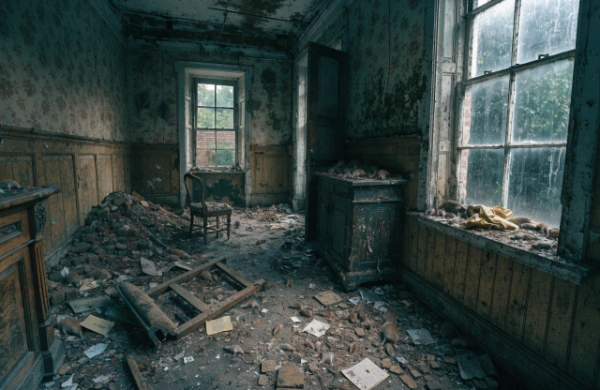
Damp and mould are rarely the problems tenants complain about first. What usually prompts action is the smell that never quite goes away, the black marks that return no matter how often they are cleaned, or the sense that a home feels colder and harder to live in than it should.
Across Yorkshire, these issues are common, particularly in older rental properties. They are also routinely minimised. Tenants are told to open windows more often, turn the heating up, or manage the problem themselves, even where it has been reported repeatedly. Over time, that approach leaves people with conditions that slowly affect their health, comfort, and finances.
The real issue is not the mould itself; it is what has been allowed to persist behind it.
Where damp and mould usually come from
In practice, damp problems tend to follow a familiar pattern. A small defect appears, often outside the property or behind a wall, and is either missed or treated as insignificant. Moisture builds up slowly, and the visible signs only appear once the problem has already taken hold.
In Yorkshire homes, damp is commonly linked to issues such as:
- leaking roofs or damaged guttering that allow water to enter over time
- cracked brickwork or failed render on external walls
- inadequate insulation that causes internal surfaces to remain cold
- ventilation systems that are ineffective or poorly maintained
While lifestyle changes alone rarely resolve persistent mould, condensation does play a role in some cases. If cleaning, ventilation and heating adjustments make no lasting difference, the cause is usually structural.
Why do we often downplay these problems?
One of the reasons damp and mould issues persist is the way they are framed once reported.
Tenants frequently find that the problem is quickly labelled as condensation, regardless of how long it has been present or how often it returns. Once that label is applied, responsibility quietly shifts from maintenance to behaviour. The result is delay.
A wall may be wiped down, painted over or patched, but the source of moisture is left untouched. Months later, the mould comes back, usually worse than before. At that point, the issue is treated as ongoing rather than unresolved.
This cycle can repeat for years in the same property.
Living with ongoing damp
The impact of damp and mould is not always dramatic, but it is persistent.
Homes affected by damp are harder to heat and more expensive to run, particularly during colder months. Moist air makes rooms feel uncomfortable even when the heating is on, and tenants often find themselves avoiding certain spaces altogether.
Belongings are damaged gradually. Clothing, furniture and soft furnishings absorb moisture and develop odours that are difficult to remove. Replacing these items is rarely treated as part of the problem, but the cost builds up quietly over time.
Sleep can also be affected, especially where damp contributes to cold conditions or breathing difficulties. What begins as an irritation can become a constant background stress.
Health effects that are easy to dismiss until they are not
Health concerns linked to damp and mould often develop slowly, which makes them easy to overlook.
People may notice persistent coughing, worsening asthma symptoms, sinus irritations, or repeated minor illnesses, particularly in children or older household members. Common symptoms often do not immediately link to living conditions.
Over time, patterns emerge. Symptoms improve when someone is away from the property and worsen again on return. Medication becomes more frequent. Recovery takes longer than expected.
At that stage, the living environment is no longer neutral.
When damp becomes a maintenance issue rather than a nuisance
Not every instance of mould points to a landlord’s failure. Responsibility depends on cause and response.
Concerns tend to cross into maintenance failure where mould:
- returns repeatedly after cleaning or decoration
- spreads across multiple rooms or surfaces
- worsens during wet weather
- is accompanied by visible damp patches or water ingress
- continues despite being reported and inspected
What matters is not whether a landlord intended to neglect the property, but whether reasonable steps were taken once the issue was known.
Temporary fixes and why they fail
Many damp cases stall because they are treated at the surface.
Painting over affected areas, replacing sections of plaster, or advising the use of dehumidifiers may improve appearance in the short term, but they do not address moisture entering the building or being trapped inside it. In some cases, sealing walls without improving ventilation can make the problem worse.
When mould returns after these measures, it’s usually a sign that the underlying issue has been avoided rather than resolved.
Evidence and the reality of proving the problem
Damp-related disputes often come down to evidence, particularly where landlords argue that issues were not reported or were caused by tenant behaviour.
What tends to matter most is not a single complaint, but a pattern. Photographs showing progression over time, copies of repair requests, records of inspections and any medical evidence linking symptoms to the property all help establish what has been happening.
Delays also matter. A repair that might reasonably take weeks becomes difficult to justify when it stretches into months or longer without meaningful action.
When damp and mould may justify a legal claim
A legal claim may be appropriate where damp and mould have been allowed to persist and cause harm.
This may include damage to belongings, increased living costs, health problems, or prolonged disruption to normal life. In some cases, tenants may also seek a reduction in rent for the period during which the property was not properly maintained.
Each case turns on its own facts, particularly how the issue arose and how it was handled once reported.
Knowing when to stop waiting
One of the most common features of damp cases is how long tenants wait for things to improve. Many people delay taking further steps because they expect repairs to happen eventually.
If conditions remain unchanged after repeated reports, waiting longer usually worsens the situation. At that point, understanding what options exist can prevent the problem from becoming a permanent feature of daily life.
Taking a clearer view of the situation
Living with damp and mould can exhaust individuals, particularly when they minimise or divert their concerns. Clear information about causes, responsibilities and thresholds shifts the focus from coping to deciding what to do next.
For tenants across Yorkshire, recognising that damp is no longer just an inconvenience is often the first step toward improving living conditions and protecting long-term health.