

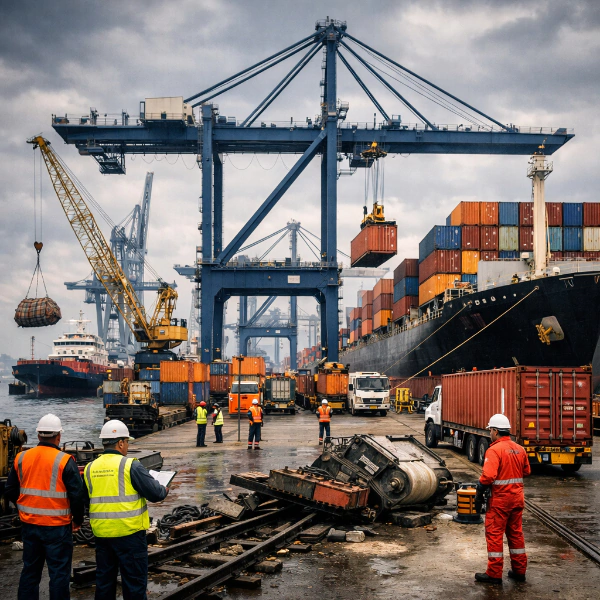
Hull’s dockyards and port operations involve constant movement, heavy machinery, and tight working spaces. These environments are inherently high‑risk, and when something goes wrong, injuries are often more serious than in standard workplaces. The key issue is not just the accident itself, but how the risk was controlled and who was responsible at the time.
Why port environments carry elevated risk
Dockyards combine multiple hazards:
- heavy machinery operating near workers on foot
- cargo moved at height
- confined spaces and shifting conditions
- the added danger of working near open water
These elements interact, meaning routine tasks rely heavily on clear procedures and communication.
Common types of incidents
Patterns often include:
- crush injuries from shifting cargo
- falls from height or uneven surfaces
- equipment‑related injuries due to poor use or maintenance
A typical scenario involves unclear communication between ground staff and machinery operators, causing a suspended load to shift and injure a worker. What looks like a single moment of failure usually reflects deeper issues in coordination or oversight.
Why injuries are often more severe
Because of heavy loads, machinery, and height, even small lapses can lead to:
- long recovery periods
- complex medical treatment
- extended time off work
- long‑term impact on employability
This is why port incidents are treated differently from lower‑risk workplace accidents.
How these cases are assessed
Assessment focuses on how well risks were controlled, including:
- clarity and enforcement of safety procedures
- long‑term impact of the injury
- how responsibility was shared
- whether the incident was preventable
These factors shape how responsibility is viewed.
Factors that increase seriousness
- involvement of heavy machinery
- multiple parties sharing safety duties
- known unsafe conditions
- failure to follow procedures
- delayed response to emerging risks
These elements are considered together, not in isolation.
Where responsibility sits
Responsibility may involve:
- employers (training, procedures)
- site operators (overall environment and safety systems)
- contractors (maintenance, cargo handling)
The key question is who had control over the risk at the time. Because control shifts during operations, liability is often complex.
Why liability is not always clear
Incidents may involve:
- communication failures
- equipment faults
- procedural lapses
Different parties may be responsible for different parts of the sequence, meaning the obvious explanation is not always the correct one.
Evidence that matters
Useful evidence includes:
- internal incident reports
- documented safety procedures
- training and supervision records
- equipment and movement logs
This shows how the environment was managed, not just what happened at the moment of injury.
High‑risk work does not remove responsibility
Risk is part of port work, but control determines responsibility. If systems, training, and procedures were followed, the position may differ from situations where known risks were ignored.