

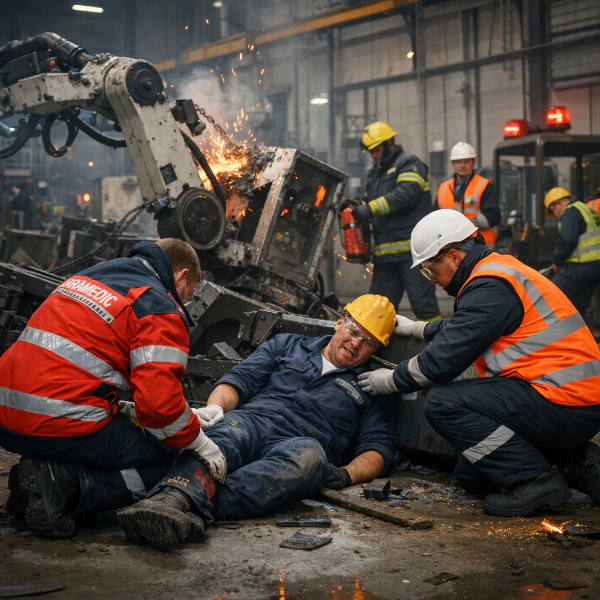
Industrial work in Sheffield relies heavily on machinery, but modern safety depends less on physical distance and more on integrated safety systems—guards, sensors, shutdown mechanisms, and clear procedures. When an accident occurs at work, the issue is rarely the machine itself but the failure of a system designed to prevent harm.
How safety systems should work
Industrial machinery is protected through:
- physical safeguards (fixed guards, interlocks, barriers)
- automated systems (sensors, shutdown triggers)
- procedural controls (training, isolation, maintenance checks)
These layers work together to keep risk at a manageable level.
Where system breakdowns occur
Failures usually involve one or more of the following:
- physical safeguards missing, damaged, or bypassed
- automated systems failing due to faults or poor calibration
- human override to maintain workflow
- maintenance failures allowing faults to develop
- procedural gaps or inconsistent training
These issues often remain hidden until an incident exposes them.
How a typical failure unfolds
A machine operates normally, but a guard has been bypassed or a sensor is not functioning. A worker interacts with the machine in a way that should trigger a shutdown. Because the system is compromised, the machine continues operating, causing injury. The visible incident is only the end point — the real issue is why the system failed to intervene.
Why these failures are often preventable
Safety systems exist to address known risks. Failures commonly stem from:
- poor maintenance
- inconsistent procedures
- intentional bypassing of safeguards
Not every incident is avoidable, but many relate to whether reasonable steps were taken to keep systems functioning.
Where responsibility may sit
Responsibility can involve:
- employers, who must ensure safe machinery and proper training
- maintenance providers, responsible for identifying and fixing faults
- equipment suppliers, if defects relate to design or manufacture
The key question is who controlled the condition of the system at the time of failure.
What determines whether a claim is possible
A claim typically depends on:
- a duty of care
- a breach of that duty
- a causal link to the injury
In machinery cases, breaches often relate to system failure rather than a single action.
Indicators a safety system failed
- missing or damaged guards
- sensors not activating
- unresolved recorded faults
- inconsistent safety procedures
- known risks left unaddressed
These form part of a wider assessment rather than proving liability alone.
Evidence that matters
Key records include:
- maintenance and inspection logs
- training documentation
- incident reports
- operating procedures
These help show whether the system was functioning or deteriorating before the incident.
Why system failure matters more than the incident
The injury shows what happened — the system failure explains why it happened. Responsibility often turns on whether the safety system was in place, maintained, and used correctly.
Core principle
Machinery risk is managed through systems, not assumptions. When those systems work, incidents are less likely or less severe. When they fail, consequences can be significant — and that is where legal responsibility may arise.