

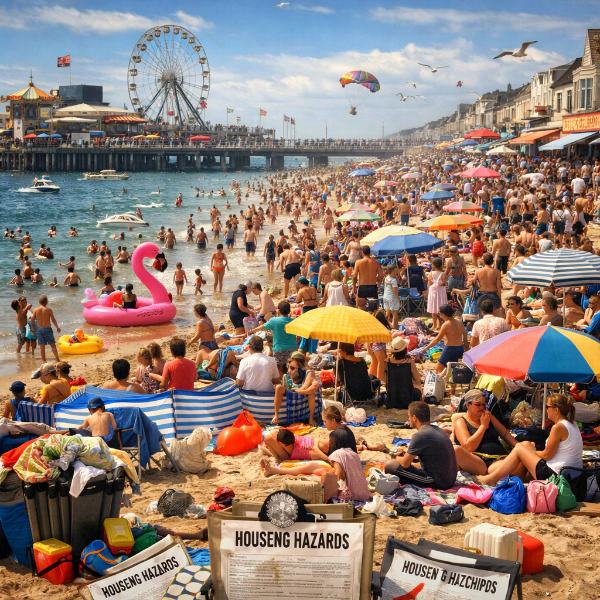
Seaside accidents in Scarborough often involve a mix of natural coastal risks and managed public areas, and the difference between the two determines whether responsibility may arise.
Coastal environments naturally include uneven terrain, slippery rocks, changing tides, and unstable ground. These are inherent features, and visitors are generally expected to take reasonable care.
Responsibility becomes relevant when hazards relate to managed spaces—areas maintained or presented as safe for public use. This includes promenades, steps, railings, designated paths, and access routes. Failures such as damaged surfaces, missing repairs, or inadequate signage may indicate a managed risk that should have been addressed.
Common hazards
- uneven or worn walkways
- slippery algae‑covered areas
- unstable cliffs
- poorly maintained steps or railings
- tidal changes affecting access
- unclear or missing warning signs
- debris on public paths
Natural vs managed risk
- Natural risk example: A visitor slips on exposed shoreline rocks. The hazard is visible and inherent to the environment.
- Managed failure example: A damaged railing on a maintained path gives way. The hazard should have been repaired.
Who may be responsible
Responsibility depends on control, not location. Local authorities, businesses, or private landowners may owe a duty of care where they manage or maintain the area.
Why not all accidents lead to claims
Coastal areas are not risk‑free. A claim usually requires:
- a duty of care
- a breach of that duty
- a link between the breach and the injury
When responsibility may be considered
- unrepaired hazards in public areas
- missing warnings where risks aren’t obvious
- unsafe access routes intended for regular use
- poorly maintained barriers or steps
- risks created by third‑party activity
Evidence that matters
Maintenance records, previous complaints, photographs, and incident reports help show whether a hazard was known and how it was managed.
The key principle
Responsibility depends on whether the hazard was within someone’s control. Natural, obvious risks may not lead to claims, but unmanaged dangers in maintained areas may.
Legal support can help assess whether a hazard should have been addressed and who was responsible for the area involved.