

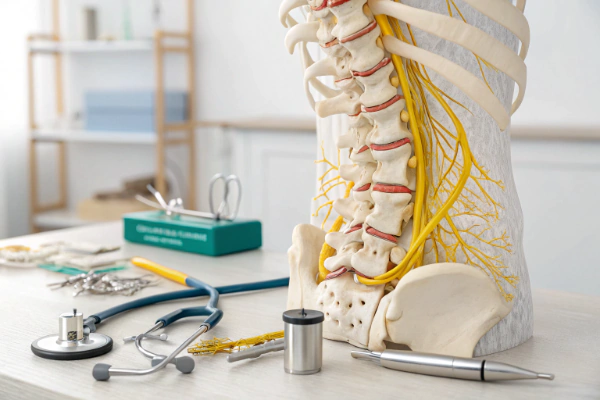
Spinal injuries are often imagined in extremes. People think of paralysis, wheelchairs, or catastrophic accidents and assume that anything short of that is a “good outcome”. In reality, spinal trauma sits on a wide spectrum, and even injuries that fall short of complete paralysis can permanently alter how someone lives.
Across Yorkshire, spinal injuries arise from high-impact accidents at work, on the road, or through serious falls. What makes these injuries particularly difficult is the gap between expectation and reality. Recovery is rarely straightforward, and the impact on independence is often not immediately apparent.
Understanding that gap is essential when assessing the true impact of spinal trauma.
What people expect after a spinal injury
Immediately after an accident, attention tends to focus on movement and sensation.
If someone can still walk, move their limbs, or avoid paralysis, the assumption is often that they will recover fully with time. Pain is expected but temporary. Work, independence, and normal routines are assumed to return once healing is complete.
Early reassurance, short hospital stays, or scans that do not show dramatic damage reinforce these expectations. From the outside, progress can appear positive, even when underlying issues remain unresolved.
This early optimism is understandable, but it does not always reflect what follows.
The reality of spinal trauma recovery
Spinal injuries affect the body in complex ways.
Damage to the spine can disrupt nerves, muscles, and coordination, leading to ongoing pain, stiffness, weakness, or loss of fine control. These symptoms may fluctuate, improving briefly before returning under strain or fatigue.
People often discover that activities they once took for granted, like standing for long periods, lifting, sitting at a desk, or driving, now trigger discomfort or limit endurance. Recovery becomes less about healing and more about managing restrictions.
Even where surgery is not required, spinal trauma can result in long-term limitations that do not neatly resolve.
Independence changes gradually, not suddenly
Loss of independence after a spinal injury is usually gradual.
Instead, it develops through a series of small adjustments. Tasks take longer. Breaks become necessary. Certain movements are avoided. Over time, these adaptations accumulate, reshaping daily life.
People may reduce working hours, change roles, or stop activities they enjoy because the physical cost becomes too high. Social plans are altered around pain levels and fatigue rather than preference.
These changes can be difficult to explain to others, particularly when the injury is not outwardly visible. From the outside, it may look like recovery has stalled without reason.
The role of pain and fatigue
Pain following spinal trauma is often persistent rather than acute.
It may be mechanical, nerve-related, or a combination of both, and it can be aggravated by posture, movement, or prolonged activity. Fatigue is also common, especially where the body is compensating for reduced stability or strength.
Managing pain and fatigue becomes part of daily planning. People weigh activities against their likely impact, sometimes choosing rest over participation to avoid setbacks.
This constant calculation can be as limiting as the physical injury itself.
Care needs that are often underestimated
Spinal trauma does not always lead to visible disability, but it frequently creates support needs.
These may include physiotherapy, pain management, specialist seating, home adaptations, or assistance with certain tasks. In more serious cases, ongoing care or supervision may be required.
What is often underestimated is duration. Support that begins as temporary can become permanent, particularly where recovery plateaus. Planning for these needs early is crucial, yet it is often overlooked in the early stages of injury.
How spinal injuries affect work and future planning
Employment is one of the areas most affected by spinal trauma.
Even if an individual manages to return to work, their productivity may decrease. Physical roles may become unfeasible, and discomfort-related pain, posture, or concentration difficulties can constrain desk-based roles.
Career plans are frequently revised. Training, progression, or relocation may no longer be practical, which has long-term financial implications.
Initial assessments often overlook these effects, prioritising immediate recovery over potential future limitations.
Common causes of spinal trauma in Yorkshire
Spinal injuries across Yorkshire arise in a range of settings.
They often result from road traffic collisions, particularly high-speed impacts or rear-end collisions. Workplace accidents involving falls from height, heavy lifting, or machinery are also common. Serious falls in public or private places can hurt the spine even if there is no direct blow to the back.
In some cases, delayed diagnosis or inadequate treatment worsens outcomes, particularly where spinal injuries are not identified or managed promptly.
When spinal trauma may justify a compensation claim
Not every injury to the spine results in a claim. The key issue is whether the injury resulted from a failure to protect someone from foreseeable risk or from substandard care.
Claims may arise where spinal trauma is caused by unsafe working conditions, negligent driving, poorly maintained premises, or failures in medical treatment. The focus is on whether reasonable steps were taken to prevent harm and whether appropriate care was provided once injury occurred.
Such claims necessitate a long-term perspective, especially when they impact independence and earning capacity.
Why early assumptions can be misleading
One of the most common problems in spinal trauma cases is early underestimation.
Initial assessments may focus on mobility rather than endurance, pain, or sustainability of activity. Decisions may be based on the assumption of complete recovery when, in fact, limitations continue.
Once we agree on compensation or set plans, it can be challenging to revisit these assumptions. Taking time to understand how the injury truly affects daily life is essential.
Reframing what spinal injury recovery looks like
For people across Yorkshire living with spinal trauma, recovery is rarely about returning to how things were. It is about finding a new balance between capability, limitation, and support.
Understanding the difference between expectation and reality helps clarify what has been lost, what can be adapted, and what support may be needed going forward. Making informed decisions about treatment, work, and accountability often relies on this clarity.