
Cosmetic procedures sit in an unusual space. Unlike most medical treatment, they are usually chosen rather than required, and the expectation is improvement rather than recovery. When something goes wrong, the impact is often dismissed as disappointment rather than harm.
Across Yorkshire, people undergo cosmetic treatments ranging from surgical procedures to non-surgical interventions, such as fillers, injectables, and laser treatments. Poor performance, inadequate planning, or inadequate aftercare following these procedures can lead to both physical and psychological consequences.
Cosmetic negligence differs not only in the method of harm inflicted, but also in the way individuals perceive and comprehend it.
Why cosmetic negligence is not treated like other medical claims
At first glance, cosmetic negligence may appear similar to other forms of medical treatment negligence. In practice, the context is very different.
Most cosmetic procedures are elective. Patients are not seeking relief from illness or injury; they are choosing to alter their appearance with the expectation of a positive outcome. That expectation shapes everything that follows.
When harm occurs, patients are often told that dissatisfaction is subjective or that results simply did not meet personal preference. This framing can obscure situations where the issue is not preference at all, but poor technique, inadequate assessment, or a failure to warn of realistic risks.
The result is that people often doubt whether what they experienced counts as negligence, even when the outcome is objectively poor.
The role of consent and expectation
Consent plays a central role in cosmetic procedures, but it is frequently misunderstood.
Valid consent requires more than a signature on a form. Patients should be given clear, accurate information about what a procedure can realistically achieve, the risks involved, and the likelihood of complications. If this information is rushed, minimised, or omitted, consent may be improperly informed.
When marketing shapes expectations instead of medical judgement, problems arise. Promotional language, before-and-after images, and assurances of minimal risk can all influence decision-making, particularly when procedures are offered in nonclinical settings.
When outcomes fall far short of what was implied, the gap between expectation and reality becomes part of the harm.
Where cosmetic procedures commonly go wrong
Negligent cosmetic outcomes usually result from multiple errors. Often, decisions made before, during, or after the procedure lead to negative outcomes.
Issues frequently arise where:
- patients are not properly assessed for suitability
- practitioners lack appropriate training or experience
- techniques are poorly executed
- hygiene or safety standards are inadequate
- complications are not recognised or addressed promptly
- aftercare is limited or absent
In non-surgical treatments, the risks are often underestimated because procedures are marketed as routine or low-risk. In reality, incorrect placement of injectables or poor technique can cause lasting damage.
The emotional impact of unsatisfactory outcomes
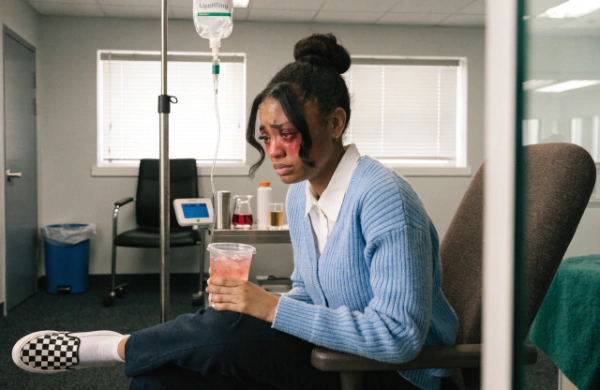
The psychological effects of cosmetic negligence are often as significant as the physical harm.
Patients may feel responsible for the elective procedure’s outcome, even if they weren’t told the risks. This can create a sense of guilt or embarrassment that discourages people from seeking help.
Changes in appearance can affect confidence, relationships and social interactions. People may avoid mirrors, photographs, or public situations, particularly where the outcomes are visible or difficult to conceal.
Unlike other injuries, there is often no clear recovery narrative. When a cosmetic procedure goes wrong, the question is not simply how to heal, but how to live with an outcome that was never expected.
Corrective treatment and its limitations
Many people pursue corrective treatment after a poor cosmetic outcome, but this process can be complex.
Further procedures carry additional risk and cost, and may not fully restore the original appearance. In some cases, corrective work improves one issue while creating another.
Patients are often left navigating multiple practitioners, each offering different opinions on what can or cannot be fixed. This uncertainty adds to the emotional strain and can prolong the impact of the original negligence.
The need for corrective treatment is an important part of assessing harm, especially when the initial failure caused the need for further intervention.
How cosmetic negligence is assessed legally
Assessing cosmetic negligence involves looking beyond dissatisfaction.
The key questions are whether the practitioner acted in line with acceptable standards, whether the patient was properly informed of risks and limitations, and whether the outcome was caused by substandard care rather than an inherent risk of the procedure.
Evidence typically includes treatment records, consent documentation, photographs, and expert opinion on whether the technique used was appropriate. In some cases, marketing materials and pre-procedure consultations also become relevant.
The fact that a procedure was elective does not remove the duty to provide reasonable care.
Why people often delay questioning what happened
Many people only begin to question their treatment after living with the outcome for some time.
This may happen when corrective options are exhausted, when confidence does not return, or when another professional explains that the result was avoidable. By then, months or years may have passed.
Delay does not necessarily weaken a case, but it does make the experience harder to revisit. Understanding that cosmetic negligence is assessed on professional standards rather than personal regret can help people reframe what happened.
When a cosmetic procedure may justify a claim
A claim may be appropriate where a cosmetic procedure was carried out negligently and caused harm that goes beyond dissatisfaction.
This may include physical injury, scarring, nerve damage, infection, or significant psychological distress linked to changes in appearance. It may also include the cost and impact of corrective treatment.
Each case depends on its facts, particularly the quality of consent, the standard of care provided, and the link between the procedure and the outcome.
Reframing responsibility after a cosmetic injury
One of the most difficult aspects of cosmetic negligence is separating choice from responsibility.
Choosing to undergo a procedure does not mean accepting avoidable harm. Where standards fall below what is reasonable, accountability still applies.
For people across Yorkshire living with the consequences of a cosmetic procedure that went wrong, understanding this distinction can be an important step toward clarity, whether or not they decide to take further action.