

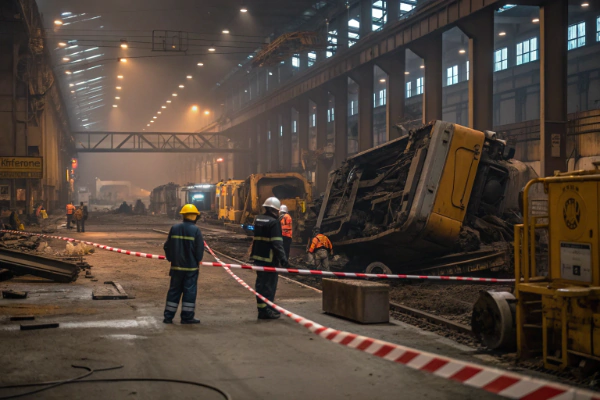
Machinery accidents usually result from multiple mistakes. In most cases, they follow a sequence of small failures that align at the wrong moment. A guard is removed and not replaced. Training is rushed. Maintenance is delayed. Work continues until something goes wrong.
Across Yorkshire, machinery-related injuries occur in manufacturing, agriculture, warehousing and processing environments where heavy equipment is part of daily work. What distinguishes these incidents is not the presence of risk, but how that risk is managed over time.
Understanding where systems break down helps explain when an accident crosses into employer liability.
How machinery accidents typically develop
In well-run workplaces, machinery risk is controlled through multiple layers. These include proper training, physical safeguards, maintenance procedures; and clear reporting systems. When those layers weaken, accidents become more likely.
A common pattern begins with pressure to keep work moving. Output targets increase, staffing changes, or equipment ages, and safeguards that once worked properly begin to erode. These changes are usually subtle. They happen incrementally, often without a clear point where someone consciously decides to compromise safety.
By the time an injury occurs, the conditions for harm have usually been present for some time.
Where safety systems most often fail
Machinery accidents tend to reflect predictable failure points rather than random events.
Common failures include:
- inadequate or outdated training for specific machines
- missing, damaged or bypassed safety guards
- poor maintenance schedules or incomplete repairs
- unclear procedures for shutdown, cleaning or fault reporting
- insufficient supervision, particularly for new or agency staff
Each issue on its own may not cause injury. When several exist together, the margin for error disappears.
Training and competence gaps
Training is vital to prevent machine injuries, but it is often the first thing to go when time or resources are limited.
Workers may be shown how to operate a machine but not how to respond when it behaves unexpectedly. They may be expected to clear blockages, make adjustments, or continue operating equipment without being trained to recognise danger signs.
Competence is not static. Training must keep pace when machines are modified, repaired, or repurposed. Where it does not, staff are left relying on habit rather than instruction, which increases risk over time.
Guarding, isolation and maintenance failures
Physical guards and safety devices exist to separate people from moving parts. When they are missing or ineffective, exposure increases immediately.
Guards may be removed to speed up work or to make maintenance easier. If they are not properly refitted, the machine may continue operating in an unsafe condition. Similarly, isolation procedures may be poorly understood or inconsistently applied, leaving equipment live when it should not be.
Maintenance failures often follow a similar pattern. Temporary fixes address symptoms rather than root causes, allowing faults to persist beneath the surface. Over time, unsafe conditions become normal.
Production pressure and workplace culture
Many machinery accidents happen in environments that discourage stopping work.
Employees may feel unable to stop production, even when something feels unsafe, particularly where delays are criticised or output targets are prioritised. Faults are worked around rather than reported, and near misses go undocumented.
This culture matters. Safety systems rely not just on equipment, but on whether workers are supported to use them properly. Where reporting is discouraged, hazards remain unaddressed.
The injuries that result from machinery accidents
Machinery-related injuries are often severe and life-altering.
It may include crush injuries, amputations, fractures, burns and deep soft-tissue damage. Even where emergency treatment is successful, long-term consequences, such as nerve damage, reduced mobility, or chronic pain, are common.
Recovery is often prolonged, and returning to previous work may not be possible. The impact on independence and earning capacity can be significant, particularly in roles involving manual skill or physical reliability.
How responsibility is assessed after an accident
Responsibility for a machinery accident is not determined solely by the final moment.
Investigations focus on whether risks are identified, controlled and reviewed appropriately. Training records, maintenance logs, risk assessments, incident reports and witness accounts all play a role in establishing what systems were in place and how they operated in practice.
What matters is not whether safety policies existed on paper, but whether they were followed. A compliant-looking system offers little real protection if not applied.
When a machinery accident may justify a claim
A claim may be appropriate where injuries result from failures in training, maintenance, supervision, or risk management.
This includes situations where machines were operated without adequate guarding, staff were not properly trained, faults were ignored, or production pressure undermined safety procedures. Employer responsibility extends to creating and maintaining systems that reduce foreseeable risk.
Each case turns on its facts, particularly whether reasonable steps were taken to protect workers from harm.
Understanding the chain of events
Machinery accidents usually involve multiple factors. They reflect how safety is managed day to day.
For injured workers across Yorkshire, examining the chain of events leading up to an accident can bring clarity. Identifying where systems failed helps distinguish unavoidable incidents from injuries that should not have happened.
That understanding is often the first step toward accountability and informed decision-making after a serious workplace injury.