

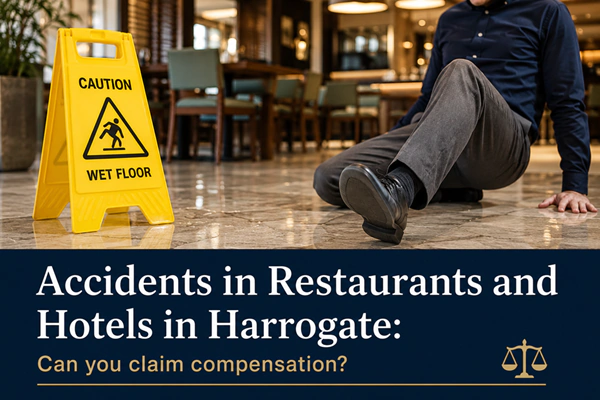
Harrogate is famous for its high-quality hotels, restaurants, and hospitality venues. Visitors and residents alike expect a well-managed, safe environment, whether they are dining out, staying overnight, or attending events. This expectation is not just about service standards, it extends directly to safety.
When accidents happen in these settings, they are often predictable. They are often linked to how well the environment is managed behind the scenes. Small lapses in procedure, if not identified and controlled, can quickly lead to injury in fast-paced hospitality environments.
Understanding whether you can claim compensation depends on more than just the accident itself. It involves looking at how the situation developed, how it was handled and whether the business met the expected standard of care.
How risk develops in hospitality environments
Restaurants and hotels operate continuously, with staff moving between tasks, cleaning areas, serving customers and resetting spaces. This creates a dynamic environment where hazards can appear and disappear quickly.
In Harrogate venues that prioritise presentation and service, there is often an expectation of effective risk management systems. Accidents are more likely to occur when those systems malfunction.
Common risk patterns include situations where:
- Cleaning is carried out without proper warning measures
- Spillages are not identified or addressed quickly
- Walkways become obstructed during busy periods
- Lighting or flooring conditions create avoidable hazards
- Temporary setups such as events introduce unmanaged risks
These issues are not inherently dangerous if managed correctly. The problem arises when there is a delay or failure in responding to them.
What determines whether a claim is valid?
A claim is not based solely on the presence of a hazard. The key issue is whether the business acted reasonably in preventing or responding to it.
To assess this, several factors are considered:
- How long the hazard was present
- Whether staff were aware or should have been aware
- What steps were taken to remove or control the risk
- Whether warning measures were in place
For example, a spillage that occurs and is immediately cleaned with clear signage may not result in liability. However, the situation significantly changes if the same spillage remains unattended in a busy area.
The standard applied is not perfection, but reasonable care. The question is whether the business did enough to prevent the accident.
A Harrogate hospitality scenario
A guest staying in a Harrogate hotel walks along a corridor where cleaning has recently taken place. The floor is wet, but no warning signs have been positioned.
The guest slips and suffers an injury. After the incident, it becomes clear that the cleaning process was carried out without any visible precautions to alert guests.
In this case, the problem is not cleaning but the risk it creates. This is where responsibility may arise.
Less obvious accident scenarios in restaurants and hotels
Not all hospitality accidents are as straightforward as slips on wet floors. Often, the cause is less visible but still linked to how the environment is managed.
Examples include:
- Chairs or furniture placed in a way that creates trip hazards
- Loose carpets or flooring defects in guest areas
- Poorly maintained staircases or handrails
- Inadequate lighting in corridors or entrances
- Hot food or drinks causing injury due to unsafe handling
These situations often go unnoticed until an accident occurs. However, if the business could have identified and addressed them, they still fall within its responsibility.
What evidence is important in these cases?
Evidence determines whether a claim can be supported. In hospitality settings, multiple sources are often available, but they must be secured quickly.
- CCTV footage showing the conditions at the time
- Photographs of the hazard or surrounding area
- Witness accounts from staff or other guests
- Records of cleaning schedules or maintenance work
- Medical documentation confirming the injury
Hotels and restaurants, which monitor many areas, find CCTV particularly useful. However, footage is often only retained for a limited period.
Photographs help capture conditions that may change shortly after the incident. A hazard may be removed quickly, making visual evidence essential.
Witnesses can provide independent confirmation, which is important if the business disputes the circumstances.
How responsibility is assessed in hospitality claims
Responsibility usually sits with the business operating the premises, as they control the environment and the procedures in place.
However, there are situations where responsibility may involve other parties. For example, if a maintenance issue caused the accident, the external contractor responsible for repairs may also be considered.
The key question is always the same: who had control over the conditions that led to the injury, and did they act reasonably?
Why timing and reporting matter
Hospitality environments change rapidly. Areas are cleaned, reset and reused throughout the day. This procedure means evidence can be lost quickly if action is not taken at the time.
Reporting the incident ensures that there is an official record. It also confirms that the business was made aware of what happened.
Capturing photographs and speaking to witnesses at the time helps preserve details that may otherwise be forgotten or disputed later.
Hospitality accident claims: How can Marley Solicitors help?
Understanding your position early can help you take the right steps if you have suffered an injury in a Harrogate restaurant or hotel.
Marley Solicitors assist individuals across Yorkshire with claims involving hospitality environments. By reviewing the circumstances of the incident and how the risk was managed, they can provide clear guidance on whether a claim is likely to succeed and what to do next.
When a claim is more likely to succeed
Claims are generally stronger where there is clear evidence that a hazard was present and not managed appropriately.
This often includes situations where:
- A risk was visible and left unaddressed
- No warning measures were in place
- Procedures were not followed correctly
- The issue had been present for a period of time
Demonstrating these factors clarifies the position significantly.
Moving forward with a clear understanding
Following proper systems often prevents accidents in Harrogate’s restaurants and hotels. When those systems fail, the focus shifts to whether reasonable steps were taken to protect customers.
By understanding how these claims are assessed and what evidence is required, you can approach the situation with clarity. If the circumstances show that the accident could have been avoided, there may be grounds to pursue compensation.