

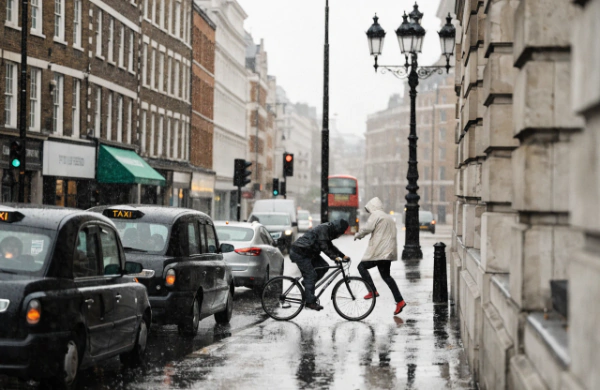
Pedestrians are the most vulnerable people on the road. They have no protective shell, no warning systems, and no ability to absorb impact. When something goes wrong, the consequences are often immediate and severe, even at low speeds.
Across Yorkshire, pedestrian injuries occur in places people use every day. High streets, residential roads, rural lanes, car parks, and crossings that should be safe often become the setting for serious accidents. What makes these incidents particularly difficult is that responsibility is frequently questioned, even where the pedestrian had little control over events.
Understanding how pedestrian accidents happen, and how liability is assessed, helps clarify when a compensation claim may be appropriate.
Why pedestrians face disproportionate risk
Pedestrians rely entirely on others to act with care.
Drivers control speed, direction, and stopping distance. Pedestrians do not. Even a brief lapse in attention by a driver can result in injury that permanently alters someone’s life.
This imbalance means that outcomes are often far more serious than the circumstances might suggest. A low-speed collision or sudden manoeuvre can still cause fractures, head injuries, or spine trauma.
Particularly in built-up areas where one should expect pedestrian presence, the law acknowledges this vulnerability.
Common scenarios in pedestrian accidents
Pedestrian injuries across Yorkshire tend to arise in predictable situations.
These include busy town centers, residential streets, school zones, parking lots, and rural roads without pavement. Visibility, speed, and road layout often play a role, particularly where pedestrians are crossing or walking close to traffic.
Situations that frequently appear in pedestrian injury cases include:
- vehicles failing to stop at crossings
- drivers turning into side roads without checking properly
- reversing accidents in car parks or driveways
- vehicles mounting pavements
- collisions on narrow rural roads with no footpaths
In many of these cases, pedestrians have little opportunity to avoid impact once a vehicle moves into their path.
The types of injuries pedestrians sustain
Pedestrian injuries are often complex and multi-layered.
They may include broken bones, head injuries, spinal trauma, internal injuries, and soft tissue damage. Because pedestrians are unprotected, the force of impact is transferred directly to the body, increasing the likelihood of serious harm.
Recovery is often prolonged. Even where injuries are not immediately life-threatening, the combination of physical pain, reduced mobility, and psychological impact can be significant.
Many pedestrians also experience ongoing anxiety around traffic, particularly if the accident occurred in a familiar place that no longer feels safe.
How responsibility is commonly disputed
Despite the vulnerability of pedestrians, responsibility is frequently contested.
Drivers may argue that the pedestrian stepped into the road unexpectedly, crossed in the wrong place, or was not paying attention. Sometimes, people make early assumptions before fully understanding the circumstances.
What is often overlooked is context. Speed, lighting, road layout, visibility, and driver attentiveness all matter. Pedestrians are not required to guarantee their safety. Drivers are expected to anticipate pedestrian presence, especially in residential and urban areas.
Liability is assessed by examining whether reasonable care was taken, not by assigning blame based on convenience.
The role of crossings and road design
Crossings are intended to protect pedestrians, yet accidents still occur in these locations.
Poorly timed lights, faded markings, obstructed sight lines, or driver impatience can all undermine their effectiveness. In some areas, crossings are absent altogether, forcing pedestrians to cross busy roads without designated safe points.
Road design also plays a role. Narrow pavements, high traffic speeds, inadequate lighting, and lack of traffic calming measures increase risk, particularly for children, older people, and those with mobility difficulties.
Where design or maintenance contributes to an accident, responsibility may extend beyond the driver alone.
Evidence and early assumptions
Evidence is critical in pedestrian injury cases.
Photographs of the scene, CCTV footage, witness statements, vehicle damage, and road layout details all help reconstruct what happened. Early statements made under stress may not fully reflect the circumstances, particularly where injuries are serious.
Pedestrians may feel pressure to accept blame or minimise the incident, especially if they are unsure of their rights. Taking time to assess evidence properly can significantly change how responsibility is understood.
The impact on work and daily life
Pedestrian injuries often disrupt routine activities in ways that are easy to underestimate.
Walking may become painful or exhausting. Public transport can feel daunting. Independence may be reduced, particularly where confidence is shaken or mobility is affected.
Time off work is common, and some people find they cannot return to the same role or hours as before. These effects can persist long after physical healing appears complete.
The disruption is not always visible, but it can be long-lasting.
When a pedestrian accident may justify a claim
Not every pedestrian accident leads to a compensation claim. The key issue is whether the injury resulted from negligence or a failure to manage foreseeable risk.
Claims may arise where drivers fail to give way, do not observe crossings, travel at inappropriate speeds, or fail to account for vulnerable road users. They may also arise where road conditions, layout, or maintenance create unnecessary danger.
The seriousness of injury is assessed alongside its long-term impact on independence, work, and quality of life.
Children and vulnerable pedestrians
Children, older people, and those with disabilities face increased risk as pedestrians.
Their presence should be anticipated, particularly near schools, residential areas, and public facilities. Where accidents involve vulnerable pedestrians, a higher standard of care is often expected.
Failure to account for this vulnerability can be a significant factor in assessing responsibility.
Regaining perspective after a pedestrian accident
People often feel vulnerable and uncertain after pedestrian accidents, particularly when there is a dispute over responsibility.
Understanding how these road accidents occur, how liability is assessed, and how vulnerability is recognised in law can add clarity to a situation that initially feels overwhelming.
For people across Yorkshire who were injured while on foot, recognising that responsibility does not rest solely on the most vulnerable party is often an important step toward deciding what to do next.