

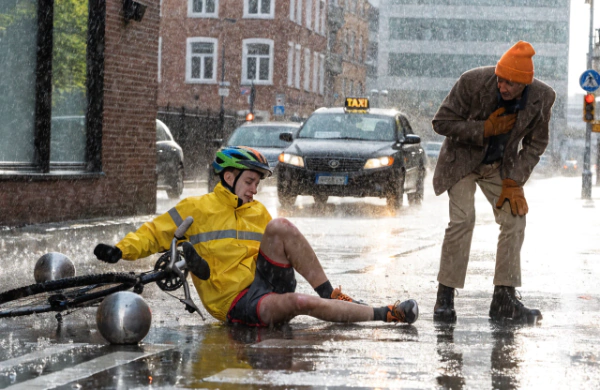
On the road, cyclists and motorcyclists face unique risks that other road users do not. Even low-speed collisions can cause serious injury, and hazards that might barely affect a car can be catastrophic for someone on two wheels.
Across Yorkshire, cycling and motorcycle accidents occur on busy urban roads, rural lanes, and commuter routes that mix fast traffic with inadequate infrastructure. What often distinguishes these cases is not just the severity of injury but the imbalance of risk between those involved.
Understanding how these accidents happen, and why responsibility is often disputed, helps explain when a claim may be justified.
Why cyclists and motorcyclists are especially vulnerable
Unlike drivers, cyclists and motorcyclists have no external protection. Helmets and protective clothing reduce injury, but they cannot eliminate risk where impact or loss of control occurs.
Common factors that increase vulnerability include:
- limited visibility to other road users
- proximity to fast-moving traffic
- exposure to road surface defects
- reliance on balance and traction
Because of this vulnerability, outcomes are often severe even where the collision itself appears minor.
The role of road conditions in Yorkshire accidents
Road conditions play a significant role in many cycling and motorcycle accidents across Yorkshire.
Potholes, uneven surfaces, loose gravel, poorly maintained drains, and faded road markings are far more dangerous for two-wheeled vehicles than for cars. On rural routes, narrow lanes and blind bends increase the risk of sudden encounters with vehicles travelling at speed.
In urban areas, poor bicycle lane design, debris on the carriageway, and junction layouts that prioritise traffic flow over safety can all contribute to collisions.
These factors are often overlooked in the immediate aftermath of an accident, despite being central to how it occurred.
Common collision scenarios
While no two accidents are identical, certain scenarios appear repeatedly.
These include:
- vehicles pulling out at junctions without seeing a cyclist or motorcyclist
- drivers changing lanes without checking mirrors properly
- overtaking manoeuvres that leave insufficient space
- sudden braking or turning by vehicles ahead
- loss of control caused by road defects or surface contamination
Responsibility in these cases is rarely straightforward, particularly where visibility or road layout is contested.
Injuries that commonly result
Injuries suffered by cyclists and motorcyclists are often serious and multi-layered.
They may include fractures, head injuries, spinal trauma, soft tissue damage, and internal injuries. Even where protective gear is worn, impact forces are transferred directly to the body.
Recovery is often prolonged, and secondary issues such as chronic pain, reduced mobility, or psychological effects can develop over time. Returning to riding, or even to normal travel routines, may not be straightforward.
When driver behaviour is part of the picture
Driver negligence is a factor in many two-wheeled accidents.
Failures to observe, misjudging speed or distance, and assuming priority where it does not exist all contribute to collisions. In some cases, drivers may claim they did not see the cyclist or motorcyclist at all.
While this explanation is common, it does not remove responsibility. Road users are expected to look properly and account for vulnerable users, particularly at junctions and in shared spaces.
Infrastructure and authority responsibility
Not all cycling and motorcycle accidents are caused by other drivers.
The authority responsible for the road may bear responsibility when road defects, inadequate signage, or poor maintenance contribute to an accident. This is particularly relevant where hazards have been present for some time or where previous complaints have been made.
Examples include:
- unrepaired potholes or sunken covers
- loose gravel following road works
- poorly designed traffic calming features
- inadequate warning of hazards
These cases often require careful evidence gathering to establish how long the hazard existed and whether reasonable steps were taken to address it.
The impact on work and daily life
The consequences of cycling and motorcycle injuries often extend beyond physical recovery.
Time off work is common, particularly where injuries affect mobility or concentration. For those who rely on cycling or motorcycling for commuting or employment, alternative transport may be costly or impractical.
This can also have an impact on confidence. Many people struggle to return to riding, even after physical recovery, due to fear of recurrence or lack of trust in road safety.
These factors shape the long-term impact of an accident in ways that are not always immediately visible.
Evidence and early assumptions
As with many road traffic cases, evidence plays a crucial role.
Photographs of the scene, details of road conditions, witness accounts, and vehicle positioning all matter. Early assumptions about fault can be misleading, particularly where road layout or surface conditions are involved.
Cyclists and motorcyclists may feel pressure to accept blame, especially where damage to other vehicles is minimal. Before drawing any conclusions, it is essential to carefully review how the accident occurred.
When a cycling or motorcycle accident may justify a claim
A claim may be appropriate where injury results from negligent driving, unsafe road conditions, or a combination of both.
The emphasis lies on determining if the responsible parties exercised reasonable care and if the injury was preventable. The seriousness of the injury and its impact on independence, work, and quality of life are central to this assessment.
Each case depends on its facts, particularly where liability is contested.
Regaining perspective after a two-wheeled accident
People often feel vulnerable and uncertain after cycling or motorcycle accidents, especially when there is a dispute over responsibility or when recovery progresses slowly.
Understanding the factors that contribute to these accidents, and how vulnerability affects outcomes, helps bring clarity to situations that often feel unfair or chaotic.
For those across Yorkshire injured while cycling or motorcycling, recognising that their experience is shaped by more than individual errors is often an important step toward deciding what comes next.