
Water leaks rarely announce themselves clearly. In many Yorkshire properties, they start as a faint stain, a persistent damp smell, or a small drip that appears and disappears. Tenants often perceive the issue as minor, especially when they receive assurances of its resolution.
What turns a leak into a serious problem is not the water itself, but what happens next. When leaks are left unresolved, they damage property, affect health, and create disputes about responsibility that are far harder to untangle once the damage has spread.
Knowing what truly matters after a leak occurs can determine whether the problem resolves or persists indefinitely.
How do leaks typically develop in rented properties?
Many factors, including the age and condition of the building, contribute to the emergence of leaks in Yorkshire homes.
Common sources of leaks include failing pipework, poorly maintained roofs, damaged guttering, defective seals around bathrooms or kitchens, and issues within communal plumbing systems. Converted buildings or older terraces often conceal pipe runs, leaving leaks undetected for extended periods.
In reality, tenants frequently discover a leak only after the damage has already started. At that point, the problem no longer remains limited to a single fault and could potentially affect walls, ceilings, floors, electrics, or neighbouring properties.
Why water damage escalates so quickly
Water does not stay in one place.
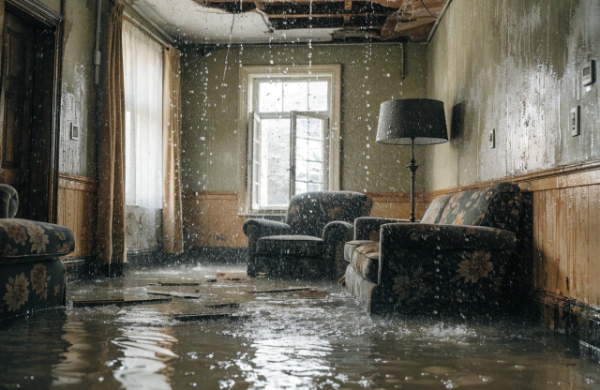
Once moisture enters a structure, it spreads through porous materials, weakening plaster, warping wood, and creating conditions where mould can develop. Even a slow leak can cause extensive damage if it continues unchecked.
Tenants may find themselves moving furniture, placing containers to catch drips, or avoiding affected rooms altogether. While these workarounds don’t halt the damage, they frequently become a part of daily life as repairs continue.
When visible damage becomes evident, the cost and complexity of repairs typically escalate significantly compared to early resolution.
The practical impact on living conditions
Ongoing leaks affect more than the fabric of a property.
Rooms may become unusable due to damp, odour, or safety concerns. Electrical fixtures can be affected, creating additional risks. Heating efficiency often drops as moisture increases, making properties harder and more expensive to keep warm.
Personal belongings are frequently damaged. Prolonged exposure to moisture can ruin flooring, soft furnishings, clothing, and electrical items. While the repair process rarely includes replacing these items, it can have a significant financial impact on tenants.
Living with visible water damage also creates uncertainty, particularly where tenants are unsure whether the problem will be resolved or continue to worsen.
When leaks raise health and safety concerns
Water damage is not just a maintenance issue; it can create health and safety risks if left unresolved.
Persistent damp increases the likelihood of mould growth, which may affect respiratory health. Wet surfaces raise the risk of slips or falls, while water near electrical systems can present obvious hazards.
In some cases, leaks contribute to structural weakening, particularly where ceilings or floors become saturated. These risks tend to increase over time rather than remain static.
The seriousness of the situation changes once it affects health or safety.
What landlords often focus on, and what gets missed
When tenants report leaks, they often prioritise the immediate symptom over the wider consequences.
A pipe may be tightened, a patch applied, or a ceiling repainted, while the underlying cause remains unresolved. Tenants are reassured that the issue has been fixed, only to see the same damage reappear weeks or months later.
What is often missed is the cumulative effect of repeated leaks and failed repairs. Each delay increases the extent of damage and reduces the credibility of temporary solutions.
Responsibility is not determined by whether an attempt was made, but by whether the problem was properly addressed.
What evidence actually matters in leak-related disputes
Water leak cases frequently come down to evidence, particularly where there is disagreement about reporting, timing, or responsibility.
Evidence that tends to matter includes:
- photographs showing the progression of damage over time
- records of when the leak was first reported and how it was described
- copies of messages, emails, or repair logs
- notes of inspections or works carried out
- evidence of repeated leaks or recurring damage
- receipts or photographs showing damage to personal belongings
Patterns are often more important than individual incidents. A history of unresolved leaks carries more weight than a single report.
The importance of timing and response
How quickly a leak is addressed often determines whether it becomes a larger problem.
Delays may be considered unreasonable where reports are acknowledged but inspections are slow to follow, repairs are promised but repeatedly postponed, or work carried out does not resolve the issue. A leak that continues across seasons is particularly difficult to justify.
Tenants are not expected to tolerate ongoing damage simply because access has been provided or an inspection has taken place. What matters is whether effective action was taken within a reasonable timeframe.
When water damage may justify a compensation claim
Not every leak leads to a legal claim; however, claims may be appropriate where water damage persists and causes measurable harm.
This may include damage to belongings, prolonged loss of use of parts of the property, increased living costs, or health issues linked to damp conditions. In some cases, tenants may also seek a reduction in rent for the period during which the property was not properly maintained.
Similar to other housing-related claims, the emphasis is not on assigning blame, but rather on determining whether tenants took reasonable actions once they became aware of the problem.
Why assumptions often work against tenants
One of the most common mistakes tenants make is assuming that reporting a leak is enough.
In the absence of records, disagreements frequently emerge regarding the timing of the issue’s escalation or its severity at the time. Verbal assurances are easily forgotten, and minor leaks are frequently downplayed until damage becomes obvious.
Keeping clear, dated records is not about escalation for its own sake; it is about ensuring that the situation is understood accurately if the problem is not resolved.
Deciding what to do next
Tenants may feel trapped when leaks persist despite reporting, especially when temporary repairs appear to be progressing without providing a long-term solution.
Understanding what evidence matters, how responsibility is assessed, and when delays become unreasonable helps tenants move from waiting to deciding. Preventing further damage and prolonged disruption often necessitates this shift.
For tenants across Yorkshire, water leaks usually involve more than just maintenance. When handled poorly, they become a test of whether living conditions are being taken seriously and whether action will follow once a problem is known.