

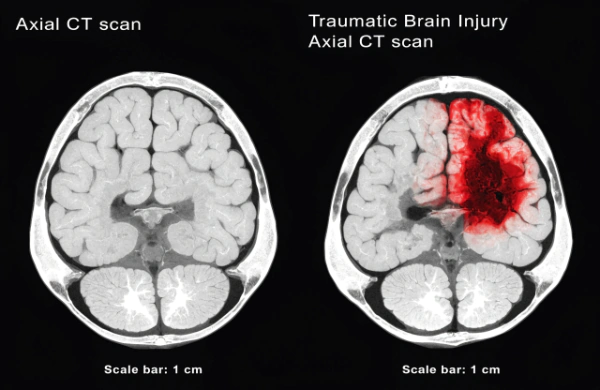
Brain injuries do not always announce themselves clearly. Across Yorkshire, people sustain head and brain injuries through falls, road collisions, workplace accidents and sports-related incidents. In many cases, there is no obvious wound, no dramatic scan result, and no clear moment when life visibly changes.
Instead, something feels wrong.
People struggle to concentrate. They become irritable or withdrawn. Tasks that once felt automatic now require effort. Family members notice changes before the injured person does. It may take months to recognise the injury for what it is.
Brain injuries are complex, often misunderstood, and frequently underestimated. Those trying to make sense of unexpected changes must understand how they happen, how they affect daily life, and when compensation may be available.
How brain injuries occur in Yorkshire
Brain injuries occur in a wide range of everyday situations.
Falls are one of the most common causes, particularly among older adults, construction workers and people working at heights. Slips on poorly maintained premises or unsafe staircases can result in head trauma even where the fall itself appears minor.
Road traffic collisions are another major cause. Drivers, passengers, cyclists, and pedestrians can all sustain brain injuries through sudden accelerations or impacts. A person does not need to lose consciousness for a brain injury to occur.
Workplace incidents also play a significant role, especially in industrial and manual environments where inadequate head protection or poorly enforced safety procedures are prevalent.
Sports-related injuries, including amateur and recreational activities, can lead to repeated head impacts. In some cases, the cumulative effect of smaller injuries causes significant long-term harm.
Medical factors may also play a role. Delayed diagnosis, missed signs of head injury, or failures to properly investigate symptoms can allow damage to worsen unnecessarily.
When symptoms are not obvious
The ease of overlooking brain injuries is a defining feature.
Some people experience immediate symptoms, such as confusion, headaches or memory loss. Others appear physically fine, returning to work or their usual routines before realising something has changed.
Common symptoms include difficulty concentrating, slow thinking, fatigue, mood changes and poor memory. These issues are often subtle at first and easy to dismiss as stress or tiredness.
Such behaviour creates problems. People may be told they are “back to normal” long before they feel like themselves again. Without recognition and support, symptoms can worsen, and recovery can stall.
Brain injuries do not always show up clearly on scans; invisible damage can still be present.
Changes in behaviour and personality
For many people, the most distressing effects of a brain injury are behavioural rather than physical.
Individuals may become more irritable, impulsive or emotionally flat. Others struggle with motivational, decision-making, or emotional regulation. These changes can feel out of character and frightening.
Relationships often suffer. Partners, friends and family may feel they are dealing with a different person, while the injured individual feels misunderstood or blamed for behaviours they cannot control.
At work, changes in behaviour or concentration may be misinterpreted as laziness or a lack of effort. Performance issues can arise even in roles the person previously handled with ease.
These effects are particularly difficult because they are challenging to explain and harder to prove.
The impact on work and independence
Brain injuries often interfere with employment earlier and more severely than expected.
Tasks that require multitasking, problem-solving or sustained focus may become exhausting. Fatigue is a major issue, both mental and physical. A full working day can feel impossible.
Some people reduce hours or change roles. Others leave employment entirely, not because they want to, but because they cannot perform at the level expected.
Outside work, independence may also suffer. Managing finances, organising appointments, or planning trips can become overwhelming. People who were previously confident and self-reliant may begin to rely on others.
This loss of independence can be deeply unsettling, particularly when it happens gradually rather than as a clear consequence of an accident.
Recovery is unpredictable
Recovery from a brain injury does not follow a predictable timeline.
Some people improve steadily over time. Others experience plateaus, setbacks or fluctuating symptoms. Stress, fatigue and sickness can all worsen cognitive difficulties.
Rehabilitation may include occupational therapy, neuropsychological support or cognitive rehabilitation. Access to these services varies, and delays can hinder recovery.
One of the hardest realities for many people is uncertainty. There is often no clear answer to how much improvement is possible or how long recovery will take.
For some, the injury becomes a long-term condition rather than a temporary setback.
Psychological consequences of brain injury
Living with a brain injury places a significant psychological burden on both the injured person and those around them.
Frustration is common, particularly when abilities fluctuate from day to day. Anxiety can develop around work, relationships or a fear of making mistakes. Low mood may follow prolonged disruption to normal life.
There is also grief. People grieve for the person they were before the injury, even when it is not outwardly visible.
Support is essential, but it is not always easy to access. Without recognition of the injury’s seriousness, individuals may struggle in silence.
When brain injuries may lead to compensation claims
Compensation may be available where a brain injury was caused by negligence or a failure to protect someone from foreseeable risk.
This may include unsafe premises, employer failures, road traffic negligence or inadequate medical care following a head injury.
Establishing a brain injury claim often requires detailed medical evidence and expert assessment. The focus is not only on how the injury occurred, but on how it has affected cognition, behaviour, work and independence.
Because the effects are often long-term and evolving, careful assessment is essential.
Why early understanding matters
Brain injuries are frequently underestimated in their early stages.
Early settlements or assumptions of full recovery can fail to account for ongoing symptoms, future care needs or long-term loss of earnings. Once compensation is agreed, it may be difficult to revisit.
Understanding the true impact of a brain injury takes time, but early guidance can help ensure that decisions are made with the long term in mind.
Making sense of life after a brain injury
For people across Yorkshire living with the effects of a brain injury, the experience can feel isolating and confusing. Even though the injury may not be visible, its consequences persist on a daily basis.
Recognising that these changes are real and that support and accountability may exist is an important step toward stability.
Clear information and informed guidance can help people understand their position and protect their future, even when recovery is uncertain.